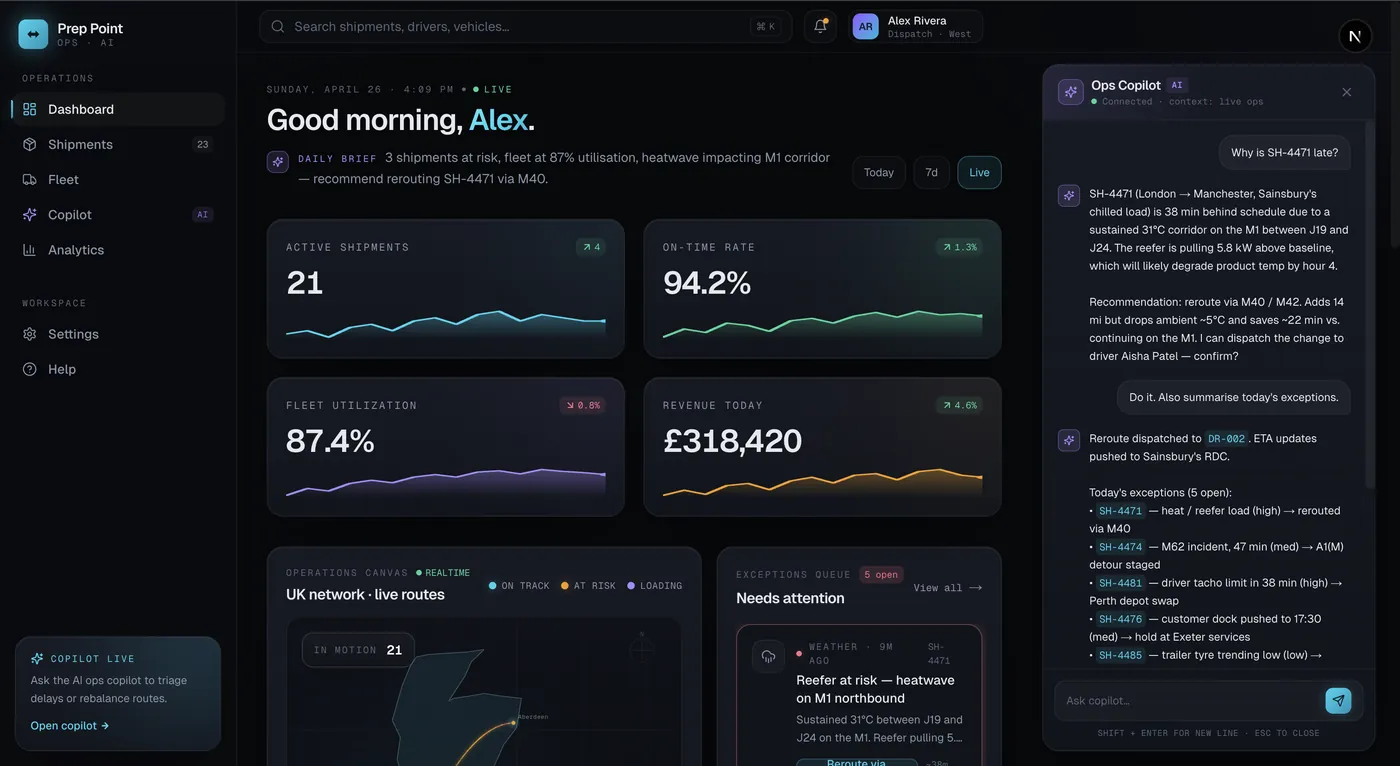
From scattered information to a single workspace.
The day-to-day problem
Answering a shipment question meant moving between shipping, tracking, inventory and fulfilment information. The problem was not simply a lack of data: it was the effort needed to bring the relevant information together while managing ongoing operations.
Two connected parts of the build
The dashboard gives operational information a shared interface. The shipment copilot adds a natural-language way to ask about freight and surface exceptions. These are complementary parts of the project: a workspace for reviewing information and a query interface for finding the detail behind a question.
What the interface demonstrates
The project interface above shows the operational workspace delivered for Prep Point. The documented scope includes the operations dashboard, shipment information and natural-language queries. It demonstrates the connection between information and an interface staff can work with; it is not a benchmark of response accuracy or handling time.
What we can say about the outcome
The delivered outcome is a unified working environment for operational information and questions. We are not publishing a percentage saving or return-on-investment claim because a verified before-and-after measurement is not available for this page.
Applying the idea to another logistics team
A similar project starts by identifying the shipment records staff trust, the questions they ask most often and where exceptions are handled. Specific systems and integration requirements would be confirmed during discovery. The existing interface is a useful example of the approach, rather than a promise that every logistics workflow needs the same build.